


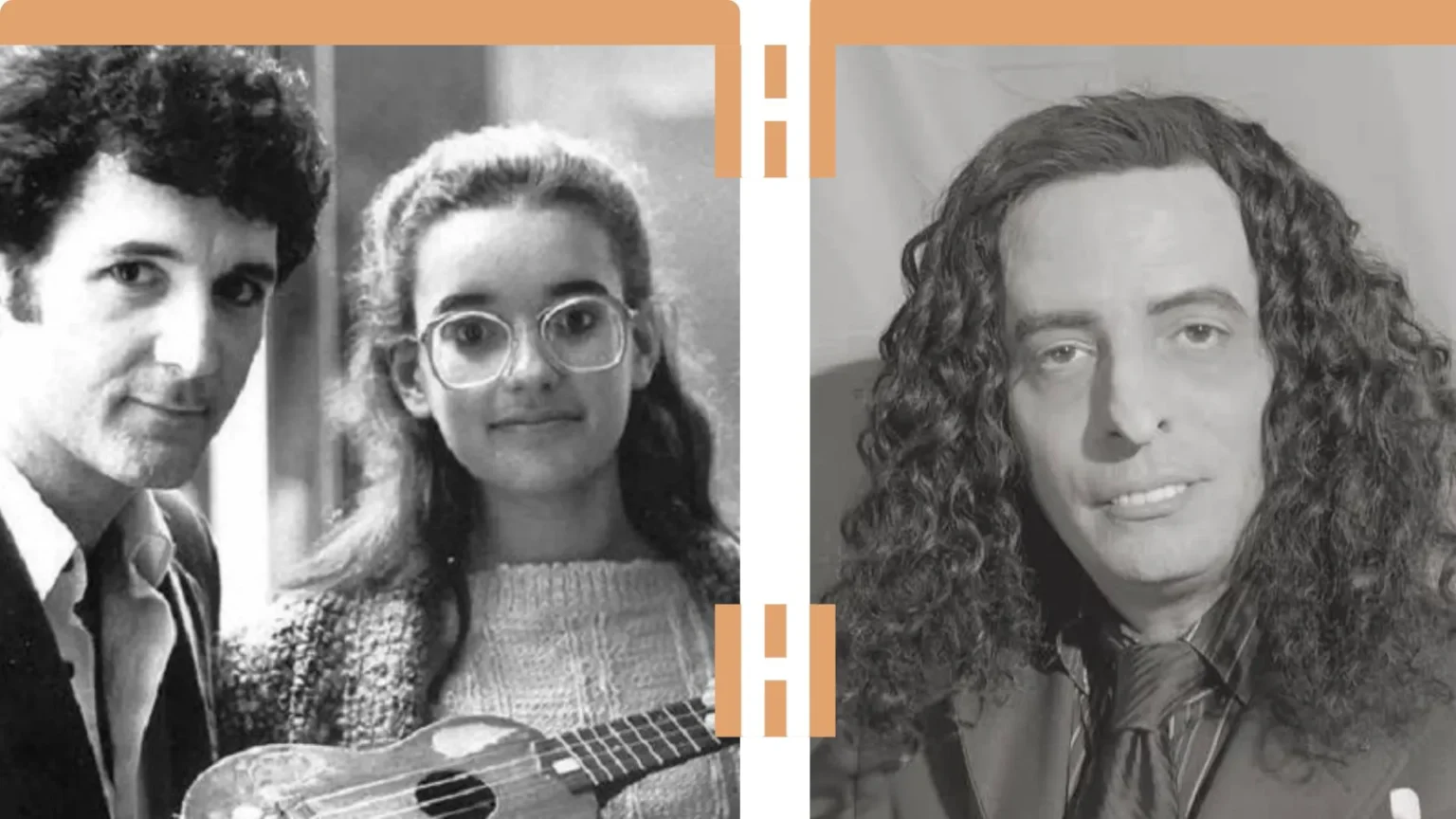
Tiny Tim’s 1969 wedding attracted an audience of tens of millions, yet the daughter born from that highly publicised marriage eventually chose a life almost entirely outside show business. That contrast has made Tulip Victoria Khaury an enduring subject of curiosity, even though reliable public information about her remains limited.
She is best known as the only child of American performer Tiny Tim and his first wife, Victoria Budinger, widely known as Miss Vicki. However, unlike her father, she has not built a public career around entertainment, television appearances, or celebrity interviews.
Her story is therefore less about conventional fame and more about what happens when a child connected to a cultural phenomenon decides to live privately. Furthermore, it demonstrates why responsible biography writing must distinguish documented history from repeated internet claims.
Who Is Tiny Tim’s Daughter?
Tulip was born into a family already surrounded by extraordinary media attention. Her father, whose birth name was Herbert Khaury, had become nationally recognisable through his high falsetto, ukulele performances, unusual presentation, and recording of “Tiptoe Through the Tulips.”
Her mother became famous almost overnight after marrying the singer on American television. Consequently, the arrival of their daughter interested newspapers, photographers, television producers, and fans who had followed the couple’s unusual public romance.
Although numerous websites provide detailed accounts of Tulip’s career, marriage, finances, and children, much of that material cannot be traced to a major publication or a direct public statement. Therefore, those claims should not automatically be treated as established facts.
The most securely documented point is her immediate family connection. The New York Times reported that Tiny Tim had one daughter from his marriage to Miss Vicki, while Roger Ebert’s website later identified that daughter as Tulip Victoria.
Information Table
| Basic detail | Credible public information |
|---|---|
| Full name | Tulip Victoria Khaury |
| Father | Herbert Khaury, professionally known as Tiny Tim |
| Mother | Victoria Budinger, professionally known as Miss Vicki |
| Public identity | Only daughter of Tiny Tim and Miss Vicki |
| Connection to entertainment | Known through her parents rather than an independent entertainment career |
| Current public profile | Largely private, with few verified interviews or recent appearances |
The choice of her first name carried an obvious association with her father’s best-known song. Nevertheless, stories explaining precisely who selected the name and why vary across secondary sources, so a careful account should not present a sentimental explanation as a confirmed quotation.
Tulip’s public identity has remained connected to her father because she did not develop an equally visible public role of her own. Indeed, most serious profiles focus on Tiny Tim’s fame, his television wedding, his musical legacy, and the unusual family circumstances into which his daughter was born.
A Childhood Shaped by an Unusual Kind of Fame
Growing up as the child of a celebrity can create attention even when the child has done nothing to seek it. In Tulip’s case, the fame surrounding her family was especially unusual because her parents’ marriage had effectively become a national television event.
Tiny Tim married Miss Vicki during an episode of The Tonight Show Starring Johnny Carson. The ceremony became one of the most widely remembered moments of his career and transformed their relationship into public entertainment.
Consequently, their daughter entered a story that the American public already felt it knew. Photographs of mother and child circulated, and she reportedly appeared as herself on television while still very young, although she did not continue toward a sustained performing career.
A 1972 press photograph preserved through Wikimedia Commons shows Victoria Khaury posing with her young daughter. That image provides a rare documented glimpse of Tulip during the brief period when her family remained a subject of routine media interest.
Information Table
| Period | Family or public milestone | Why it matters |
| Late 1960s | Tiny Tim achieved mainstream recognition | His success created the celebrity setting surrounding the family |
| 1969 | Tiny Tim and Miss Vicki married on television | The ceremony made their private relationship a major public event |
| Early 1970s | Their daughter entered the public eye as a child | Media interest followed because of her parents’ fame |
| Late 1970s | Her parents’ marriage ended | The family moved away from the original television romance narrative |
| 1996 | Tiny Tim died following his final performance period | Public interest in his life, family, and legacy returned |
| Later decades | Documentaries and retrospectives revisited his career | Renewed coverage repeatedly brought attention back to his only child |
Tulip’s parents eventually divorced, ending a marriage that had always faced intense public scrutiny. However, responsible coverage should avoid turning the separation into a collection of gossip, especially when many colourful stories come from weak or repetitive sources.
Her father subsequently married twice more. Those later relationships form part of his biography, but they do not change the fact that Tulip is widely recognised as his only child.
The distinction matters because some online profiles confuse relatives, stepfamily members, and unsupported family claims. Moreover, copied biography pages often repeat one another without identifying an original interview, court document, newspaper report, or family statement.
Growing Up Outside Her Father’s Stage Persona
Tiny Tim’s performance style was highly theatrical, but people who studied his career often described his musical knowledge as serious and extensive. He collected, remembered, and performed songs from earlier periods of American popular music, treating forgotten material with unusual devotion.
For a child, however, having a father whose public identity looked deliberately eccentric could produce a complicated relationship with fame. There is little reliable first-person testimony from Tulip explaining how she understood that experience.
Therefore, claims that she either embraced or rejected her father’s celebrity should be treated cautiously. What can be observed is that she did not pursue the same highly visible artistic path.
Her limited public presence may reflect a personal choice, ordinary life circumstances, or both. Nevertheless, without a direct interview, assigning a dramatic motive would be speculation rather than journalism.
Her Parents and Their Place in American Pop Culture
Tiny Tim became famous during a period when American television could turn an unconventional performer into a national conversation almost immediately. His falsetto rendition of “Tiptoe Through the Tulips,” accompanied by ukulele, made him memorable even to viewers who knew little about his wider musical interests.
His birth name was Herbert Khaury, and he developed his act through years of performing under different stage identities. Subsequently, television appearances gave him access to a much larger audience and made the Tiny Tim character inseparable from his public identity.
The New York Times described him as a singer who had briefly and unusually captured mass fame. The newspaper also documented his death in 1996 after decades in which his cultural status shifted between popular entertainer, novelty figure, archivist, and outsider artist.
Miss Vicki, born Victoria Budinger, became famous mainly through her relationship with him. Their televised wedding placed her inside a media event rather than allowing the relationship to develop away from public observation.
Consequently, later accounts have sometimes reduced both people to characters in a strange celebrity story. A more balanced view recognises that their marriage involved real individuals whose daughter later had to live with the lasting effects of that public image.
Why Tiny Tim Still Attracts Attention
His performances remain available through recordings, archived programmes, documentaries, and online clips. Moreover, his unusual combination of musical scholarship and theatrical presentation continues to attract audiences interested in outsider music and American television history.
The 2020 documentary Tiny Tim: King for a Day introduced his story to another generation. The film’s existence also shows that his appeal extends beyond nostalgia for a single song.
As public interest in the singer returns, searches about his family naturally increase. However, renewed curiosity does not turn private or poorly sourced details into public facts.
His daughter occupies a distinctive position within that legacy. She represents a direct family connection to the performer, but she has not made herself a regular interpreter of his life.
What Is Reliably Known About Her Adult Life?
Reliable reporting about Tulip’s adulthood is much thinner than coverage of her childhood family background. Various internet profiles describe an occupation, home, spouse, and children, yet many of these accounts rely on one another rather than on named major publications.
Roger Ebert’s website published a retrospective stating that Tiny Tim’s daughter was married, lived in Pennsylvania, and had four children at the time of publication. That is among the stronger published references to her adult family life, although it remains a brief statement rather than a detailed interview.
IMDb also lists a spouse and children, but user-edited entertainment databases are not equivalent to direct confirmation from the subject. Therefore, intimate family details should not be expanded beyond what reputable coverage supports.
Tulip keeps her personal life private and has not publicly confirmed a current relationship through a widely documented interview or statement as of 2026. This approach avoids repeating names and personal claims that appear mainly on low-quality biography pages.
Similarly, alleged details about her employment should be handled carefully. Some websites identify a specific customer-service position, but the claim lacks the type of authoritative documentation required for confident publication.
It is reasonable to say that she appears not to have followed her father into a prominent entertainment career. Beyond that, a responsible biography should acknowledge the limits of available evidence.
Information Table
| Frequently repeated claim | Responsible assessment | How it should be reported |
| She became a professional entertainer | No strong evidence supports a sustained entertainment career | State that she is primarily known through her parents |
| She works for a named organisation | Repeated online but poorly sourced | Omit unless confirmed by the subject or a credible publication |
| She has a specific net worth | No public financial records or authoritative estimate | Do not publish a precise figure |
| She has a publicly documented current partner | Major-source confirmation is limited | Use a brief privacy statement |
| She speaks regularly about Tiny Tim | Few verified interviews are publicly available | Explain that she maintains a low profile |
| She manages her father’s estate or catalogue | No credible evidence located | Omit the claim |
Why Her Net Worth Cannot Be Confirmed
No authoritative financial publication has published a verified assessment of her personal wealth. She does not appear to operate as a public company executive, major recording artist, or regularly profiled business figure whose earnings can be estimated from public contracts.
Therefore, exact figures attached to her name should not be presented as reliable. Such numbers frequently originate on websites that calculate celebrity wealth without disclosing financial records, assets, liabilities, inheritance documents, or methodology.
The value of Tiny Tim’s recordings and likeness also does not establish his daughter’s personal finances. Music rights can involve labels, publishers, estates, contracts, licensing agreements, and other parties.
Furthermore, being related to a famous performer does not prove that someone received a large inheritance. Without probate records, an estate statement, or credible financial reporting, the amount remains unknown.
The Difference Between Public Interest and Public Evidence
Search demand can create the appearance that detailed information must exist somewhere. Nevertheless, the number of pages discussing a person does not determine the reliability of the underlying claims.
Many biography sites copy the same wording, dates, occupations, and family details. Consequently, repetition can make unsupported information appear confirmed even when every page traces back to no identifiable original source.
A strong article must resist that pattern. It should provide the reader with meaningful context while clearly stating when the public record is limited.
Why She Chose a Different Path From Tiny Tim
It is tempting to describe Tulip’s privacy as a deliberate rejection of fame, but no major interview appears to support that conclusion. Her low profile is visible, yet her reasons remain her own.
What is clear is that she did not reproduce her father’s career. There is no well-documented recording catalogue, acting career, touring history, public company, or long-running television role associated with her.
That difference may partly explain continuing interest. Children of famous entertainers often become actors, musicians, social-media personalities, memoirists, or representatives of a family estate, while Tiny Tim’s daughter largely remained outside those familiar categories.
Moreover, the type of celebrity surrounding her father was unusually intense but unstable. He became instantly recognisable, yet much of the public treated him as a novelty rather than appreciating his knowledge of early popular music.
Living under that legacy could have encouraged privacy, although that remains an inference rather than a confirmed explanation. Therefore, it is more accurate to describe the outcome than to invent a motive.
Privacy as a Legitimate Public Choice
A celebrity’s child does not automatically become a public figure for life. Childhood photographs or appearances made through a parent do not create an obligation to disclose adult relationships, employment, income, or family details.
Indeed, Tulip’s limited profile shows that a person can remain connected to entertainment history without continuously participating in celebrity culture. Her story invites interest, but it also establishes a clear boundary.
Responsible coverage respects that boundary by focusing on verified family history and cultural context. It does not attempt to fill every gap with assumptions.
This principle becomes particularly important when discussing people whose fame is entirely inherited. Their names may attract searches, but search popularity does not remove their right to an ordinary private life.
Her Place in Tiny Tim’s Lasting Legacy
Tiny Tim’s legacy has gradually become more complex than the novelty image attached to his most famous song. Musicians, documentary makers, collectors, and cultural writers have increasingly examined his knowledge of historic recordings and his commitment to old popular music.
His daughter forms part of that story because she was born during the peak period of his public visibility. However, her importance does not depend on becoming a performer or providing constant commentary about him.
She represents the human side of an entertainment phenomenon that television presented almost like a continuing spectacle. Behind the unusual voice, ukulele, long hair, and public wedding was a family whose private life could not remain fully separate from the celebrity narrative.
Furthermore, the contrast between father and daughter makes the story more revealing. Tiny Tim repeatedly pursued audiences and performances, while Tulip’s adult life has generated very little authoritative coverage.
That silence should not be interpreted as failure, mystery, or scandal. It may simply reflect a successful private life that does not require public documentation.
The available evidence supports a restrained conclusion. Tulip Victoria Khaury is Tiny Tim’s only daughter, born into one of television’s most unusual celebrity families, yet she has built an identity largely beyond the spotlight.
Her continuing public interest comes from her connection to a performer who remains culturally distinctive. Nevertheless, the most respectful account recognises both the significance of that connection and the limits of what she has chosen to share.
Frequently Asked Questions
Did Tiny Tim name his daughter after “Tiptoe Through the Tulips”?
The connection appears likely because the song defined his public career, but a definitive explanation from a strong original source is difficult to establish. It is safest to describe the name as associated with his signature recording rather than quote an unsupported naming story.
Did she appear on television as a child?
IMDb credits her with an appearance as herself on The Mike Douglas Show. However, she did not develop a widely documented long-term television career.
Does she control Tiny Tim’s music rights?
No credible major publication has confirmed that she controls his recordings, publishing interests, or commercial catalogue. Music ownership can involve several parties, so the claim should not be assumed from their family relationship.
Has she written a book about her father?
No widely documented memoir written by her has been identified. Most published accounts of Tiny Tim come from biographers, journalists, filmmakers, archival interviews, and people associated with his career.